


The Beginning of Cricket in Dhading
By Narayan Silwal
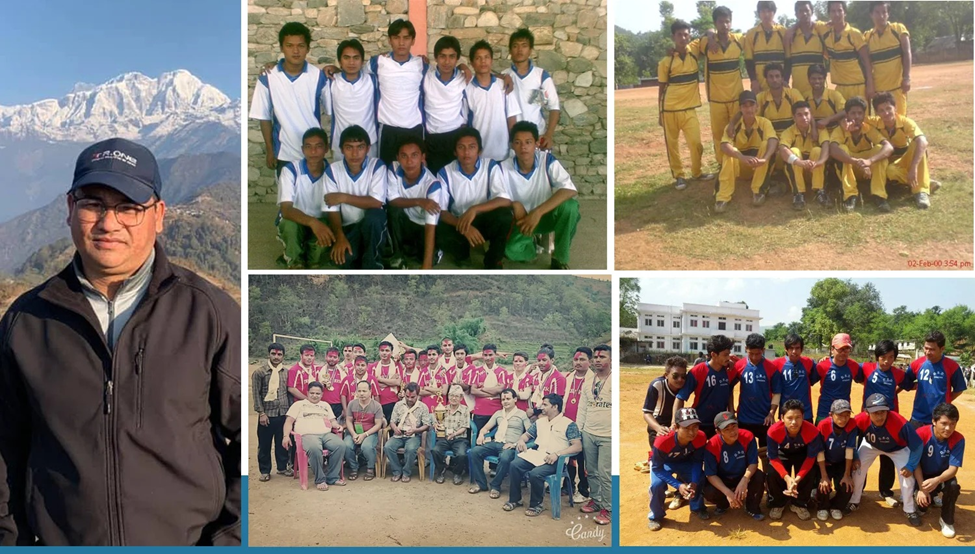
The story of how cricket began in Dhading is filled with memorable personalities and remarkable events. The origins of the sport in the district are widely credited to Anil KC of Dhadingbesi, who introduced cricket equipment, including a leather (dues) ball, to the district in 2055 B.S. (1998/99 A.D.), effectively planting the seed of cricket in Dhading.
Anil KC developed a passion for cricket after being inspired by the Cricket World Cup held in India while he was studying at college in Kathmandu. Having played cricket at the college level in the capital, he returned to Dhading with a vision of introducing the game to his hometown.
According to him, after bringing the cricket ball to Dhading, regular practice sessions began on the streets of Dhadingbesi alongside Nandu Ghale, Anand Ghale, and Raju Ghale. Gradually, Santosh Thapa, Rajesh Prajapati, Madan Shrestha, and Surendra Shrestha joined the group. In those early days, the absence of a proper playground meant that the streets served as their cricket field.
Anil KC also recalls that while they were practicing, a few Australian nationals living along the banks of the Aansikhola in Dhadingbesi noticed their enthusiasm and taught them the basic rules of cricket. Although the exact reason why those Australians were in Dhading remains unclear, their contribution to the early development of cricket in the district is remembered with gratitude.
From Puchhar Bazaar to Bich Bazaar: The Expansion of Cricket
By 2056 B.S. (1999/2000 A.D.), more than ten players had emerged in the Puchhar Bazaar area. The team then moved from playing on the streets to the confluence of the Aansikhola stream, where they found a more suitable place to play.
Anil KC captained the team, while Nandu Ghale and Anand Ghale established themselves as dependable all-rounders. Santosh Thapa became the opening batsman, Madan Shrestha the leading bowler, and Sagar Nepal the team’s wicketkeeper.
As cricket gained popularity in Puchhar Bazaar, another strong team was formed in the Bich Bazaar area around 2057 B.S. (2000/01 A.D.). The squad featured players including Kamal Raj Dhungana, Gore Gurung, Manish KC, Shankar Thapa, Tek Jung Lama, Madan Bahadur Gurung, Bharat Gurung, Kumar Gurung, Umesh Waiba, Lek Bahadur Gurung, and Dipesh Suman Mamba, further energizing the growth of cricket in Dhadingbesi.
With two competitive teams in place, friendly matches between Puchhar Bazaar and Bich Bazaar became a weekly tradition. Around the same time, Panch Kumar Shrestha began selling cricket equipment in Dhadingbesi, making the sport more accessible to aspiring players. As cricket continued to attract young enthusiasts, it gradually spread to Malekhu, Gajuri, and Benighat by 2058 B.S. (2001/02 A.D.).
The Historic Match Against Chitwan
In 2058 B.S. (2001/02 A.D.), Anil KC left Nepal for foreign employment. Although he departed, the seed of cricket that he had planted continued to flourish in Dhading. Senior players kept the game alive and ensured its steady growth.
According to Rajesh Prajapati, players from both Puchhar Bazaar and Bich Bazaar united to form a single district team, which played a three-day cricket match against Chitwan in 2059 B.S. (2002/03 A.D.).
The match marked a significant milestone in Dhading’s cricket history. During the game, Rajesh Prajapati suffered an injury after being struck by the ball and had to travel to Kathmandu for medical treatment. Although Chitwan eventually won the match, their players stayed in Dhading for a week and provided valuable coaching and training to the local cricketers. That memorable visit remains vividly remembered by the players even today.
Nava Pratibha Cricket Club and Institutional Development
After Anil KC left for overseas employment, Sanjiv Shrestha took over the leadership of cricket development in Dhading. He established the Nava Pratibha Cricket Club, organizing daily practice sessions on the open ground where the district’s Covered Hall now stands.
The club made history by becoming the first group in Dhading to collectively raise funds and purchase a complete set of cricket equipment. On several occasions, they also received support from the District Development Committee (DDC) and the District Child Welfare Committee. Around 2060 B.S. (2003/04 A.D.), their contribution to organizing cricket activities and tournaments in Dhading proved instrumental in sustaining the sport.
When the district decided to organize cricket tournaments despite lacking adequate equipment, Nava Pratibha Cricket Club provided the necessary cricket kits. While many members of the Bich Bazaar team continued as active players, Sanjiv Shrestha dedicated much of his youth to the development of cricket in Dhading. For this reason, he is widely regarded as one of the principal driving forces behind the district’s cricket journey.
Alongside Sanjiv Shrestha, individuals such as Ram Chandra Shrestha, Yadu Kumar Gurung, Kavindra Shrestha, Milan Shrestha (Laxmi Bakery), and Bijendra Adhikari played vital roles in reviving cricket during a period of stagnation and restoring momentum to the sport. Dr. Ganesh Dhungana served as the President of Nava Pratibha Cricket Club, while Sanjiv Shrestha led the team as its captain.
Sunshine Cricket Club and the Institutional Growth of Cricket
At the same time, Sunshine Cricket Club was also active in the Tallo Bazaar area under the leadership of Ram Dhamala. Ram Dhamala and Sanjiv Shrestha were the two young leaders who stepped forward to fill the vacuum in cricket during a challenging period. While many players came and went, their dedication played a crucial role in giving cricket an organized and institutional foundation in Dhading.
During that era, Nava Pratibha Cricket Club and Sunshine Cricket Club were instrumental in keeping cricket alive and ensuring its steady growth throughout the district.
The Rise of Cricket in Malekhu
Alongside Dhadingbesi, cricket also began gaining momentum in the Malekhu area. Historical accounts indicate that as early as 2055 B.S. (1998/99 A.D.), Dr. Parshan Upadhyay, who had come from Bhairahawa to teach at Bageshwori School in Richoktar, introduced cricket to students using a handmade wooden bat.
Formal cricket in Malekhu later took shape when Anil Kadel and Subash Silwal brought a cricket bat and tennis ball from Kathmandu while pursuing their studies. As the sport became increasingly popular, its influence spread to Gajuri, Baireni, and Majhimtar of Benighat.
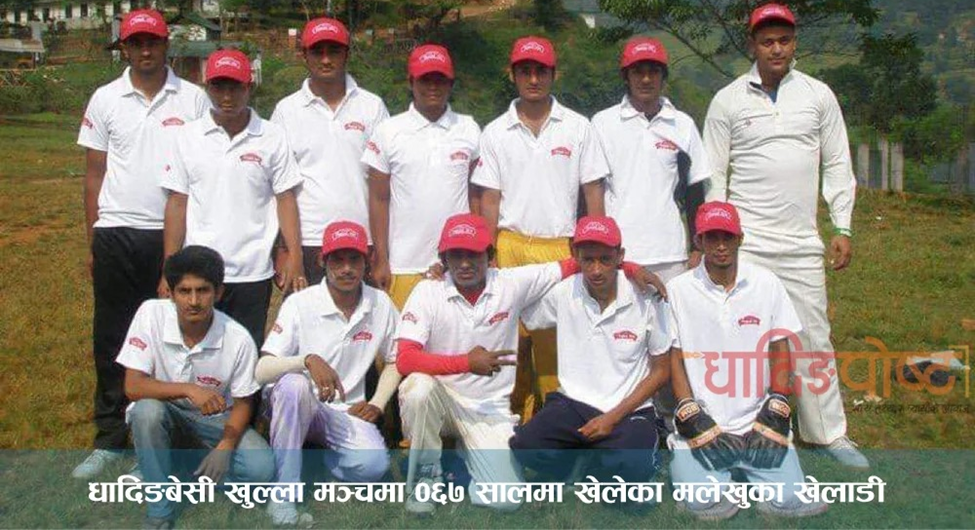
The Malekhu team, captained by Kishor Tripathi, featured talented players including Ishwor Tripathi, Prabin Tripathi, Sudip Silwal, Anil Kadel, Suren Shrestha (“Tyson”), Pradeep Shrestha, Bishal Dhungana, Sandesh Silwal, and Sandip Kadel. This team achieved a significant milestone by defeating Dhading Samaj Dhading in the Inter-Club Cricket Tournament held in Dhadingbesi in 2067 B.S. (2010/11 A.D.).
The Beginning of Cricket in Benighat
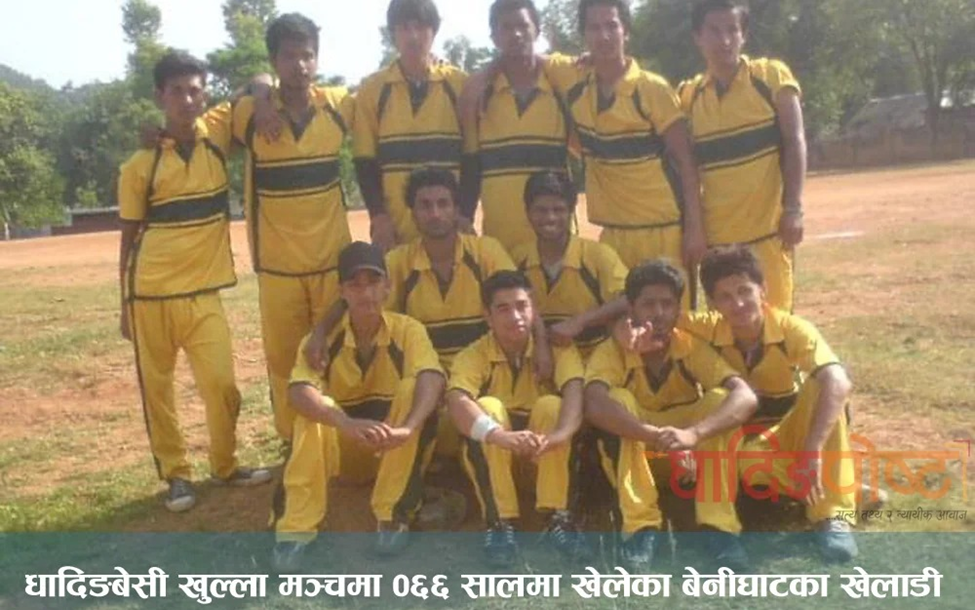
After 2059 B.S. (2002/03 A.D.), cricket established a distinct identity in the Benighat region. The game was introduced there by Dinesh Kadel and Jeevan Jamkattel.
Under the captaincy of Umesh Shrestha, the Benighat team included Sanjog Shrestha, Bikash Shrestha, Guru Kumar Shrestha, Suman Shrestha, Jeevan Jamkattel, Dinesh Kadel, Sushil Regmi, and Rabi Giri, among other promising players.
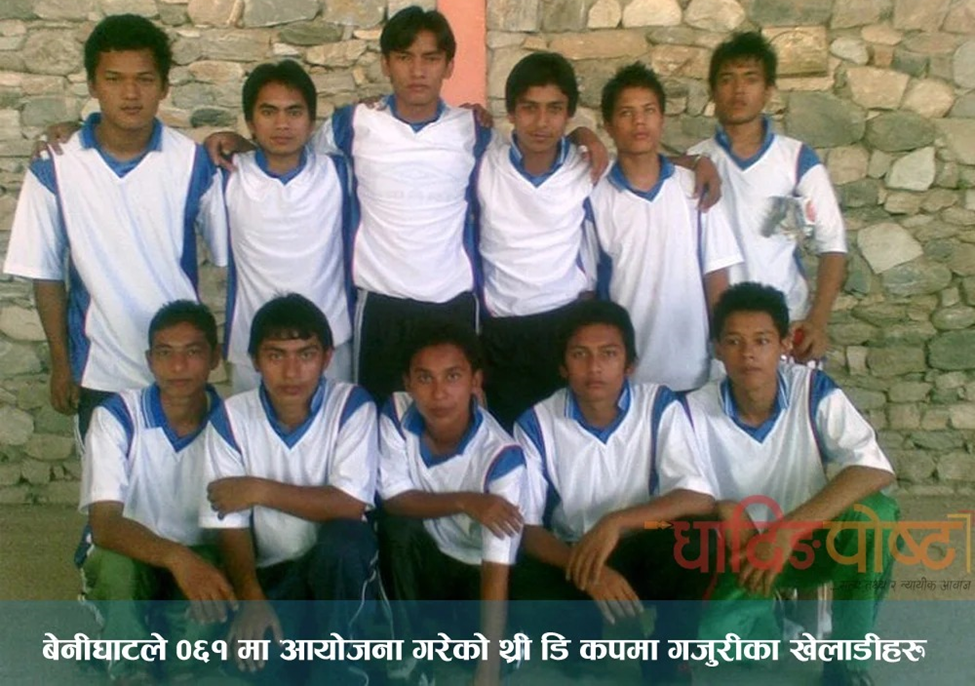
Benighat later emerged as a major venue for district-level cricket competitions. The 3D Cup, held in 2061 B.S. (2004/05 A.D.), is regarded as one of Dhading’s earliest renowned cricket tournaments. This was followed by the Karu Memorial Cup in 2065 B.S. (2008/09 A.D.), the Karu Memorial T-10 Cup in 2076 B.S. (2019/20 A.D.), and an Open District-Level Cricket Tournament in 2077 B.S. (2020/21 A.D.).
The Contribution of Dhading Samaj Dhading
Dhading Samaj Dhading also made a remarkable contribution to the growth of cricket in the district. Inspired by the pioneering generation of cricketers, a new generation of players emerged and carried the sport forward.
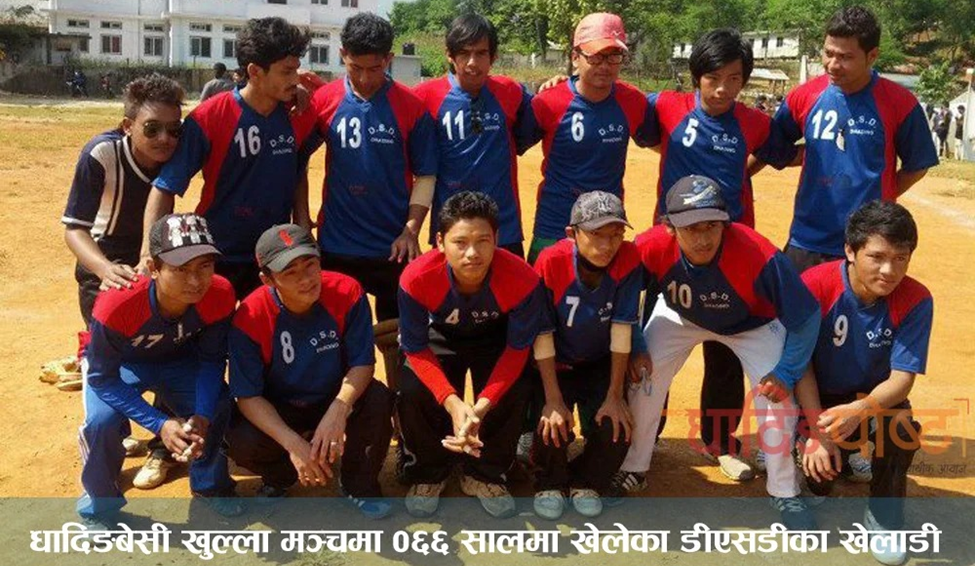
Players such as Gokarna Bhandari, Rabindra Gurung, Hem Tamang, Sanjiv Shrestha, Sanjay Sapkota, Gopi Krishna Bhandari, Bharat Gurung, Anil Tamang, and Santosh Pandey played a significant role in elevating the standard of cricket through Dhading Samaj Dhading.
The tournaments organized by the organization in 2066, 2067, and 2069 B.S. further energized the cricket scene across the district. Baireni won the 2066 tournament, Malekhu emerged victorious in 2067, and in 2069 B.S., the host team, Dhading Samaj Dhading, claimed the championship title.
The Expansion of Cricket in Gajuri and Majhimtar
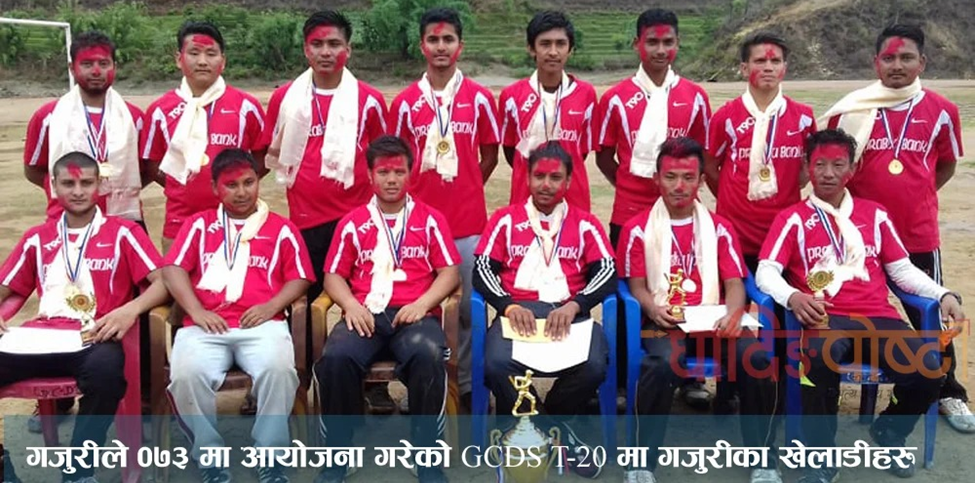
The development of cricket in the Gajuri region was also driven by the enthusiasm of many young players. According to Sandip Sapkota, Secretary of the Cricket Association of Nepal (CAN) Dhading, cricket began gaining popularity in Gajuri around 2057–2058 B.S. (2000–2002 A.D.).
Prominent players of that era included Pratik Kharel, Govinda Shrestha, Suraj Kharel, Sujit Nepali, Bhishan Kharel, Ashok Thapa, Bijayi Duwadi, and Niroj Rijal.
Sandip Sapkota recalls taking four wickets in just three overs during a district-level tournament in 2063/64 B.S. (2006/08 A.D.). He later earned the opportunity to compete in selection matches alongside national team players Sompal Kami and Avinash Bohara. Two years later, he successfully secured a place in Nepal’s Under-19 National Cricket Team.
Similarly, Sujan Kumar Bhattarai recalls that cricket was introduced to Majhimtar in Benighat Rorang in 2062 B.S. (2005/06 A.D.). He says:
“After returning from Chitwan, where I had trained at the cricket academy run by former Nepal national captain Raju Khadka, we began playing cricket on the banks of the Hugdi Khola. Gradually, with the support of Shungabha Club, we purchased cricket equipment, and regular matches started on the open field in Majhimtar.”
The Rise of Cricket in Galchhi and Baireni
The Galchhi region was no exception to the growing popularity of cricket in Dhading. According to Dinesh Karki, the Baireni team regularly participated in numerous inter-club tournaments. Players still fondly remember Baireni’s victory in the tournament organized by Dhading Samaj Dhading in 2066 B.S. (2009/10 A.D.).
In 2076 B.S. (2019/20 A.D.), the Himalaya Karu Memorial Trust organized the Karu Memorial T-10 Cricket Tournament, which further boosted enthusiasm for cricket across the district. In the same year, Benighat Rorang Rural Municipality organized its first-ever school-level cricket tournament, laying the foundation for the development of cricket from the grassroots level.
In Falgun 2077 B.S. (February/March 2021), DhadingPost.com, in collaboration with Karu Memorial Benighat, organized a district-level cricket tournament at Bishaltar. Teams representing Galchhi, Naubise, Sangkosh, Tripurasundari, Gajuri, Malekhu, and Dhading Samaj Dhading, among others, participated in the competition. Ultimately, Dhading Samaj Dhading emerged as the tournament champion.
Formation of the District Cricket Association and a Historic Achievement
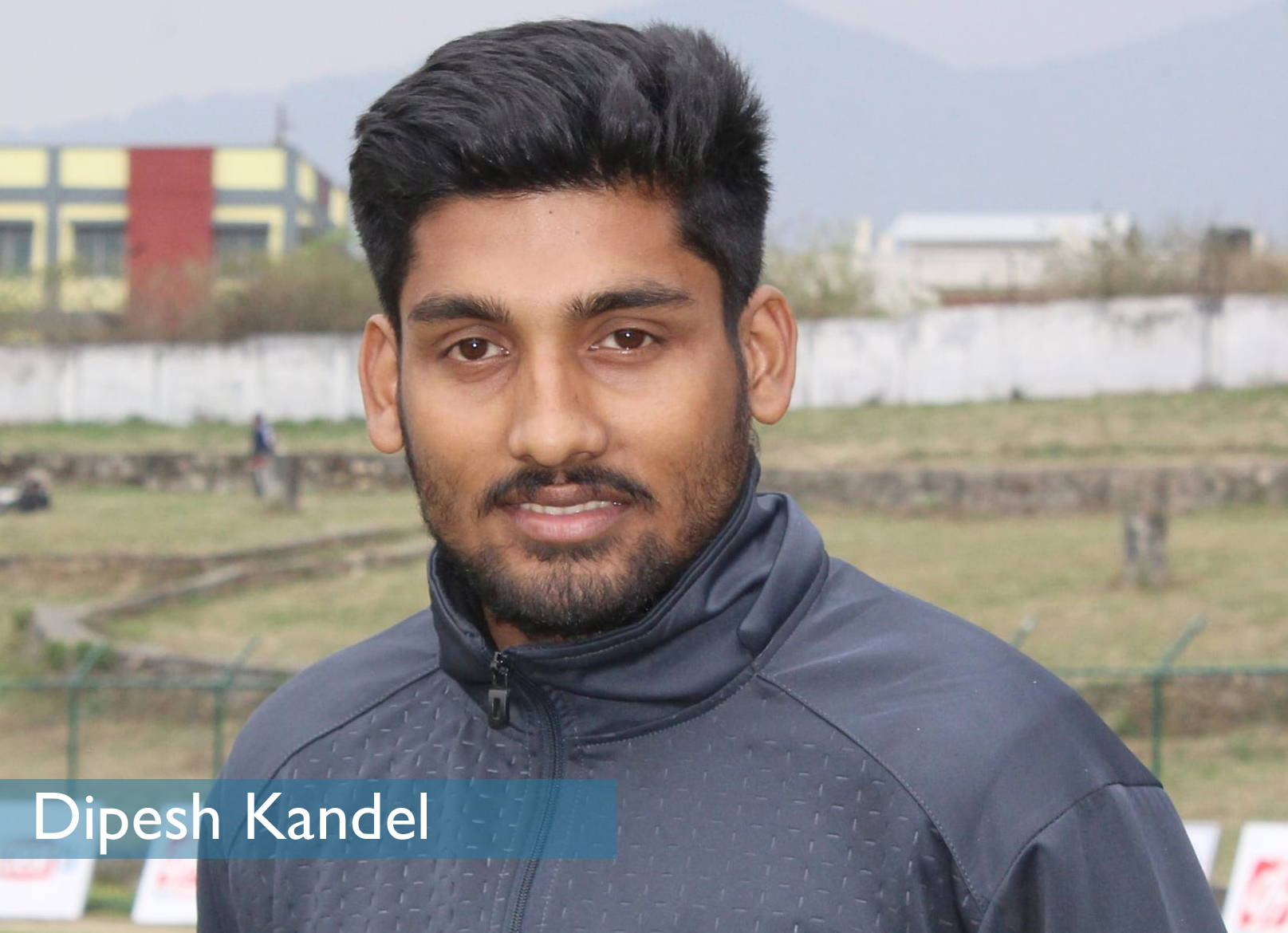
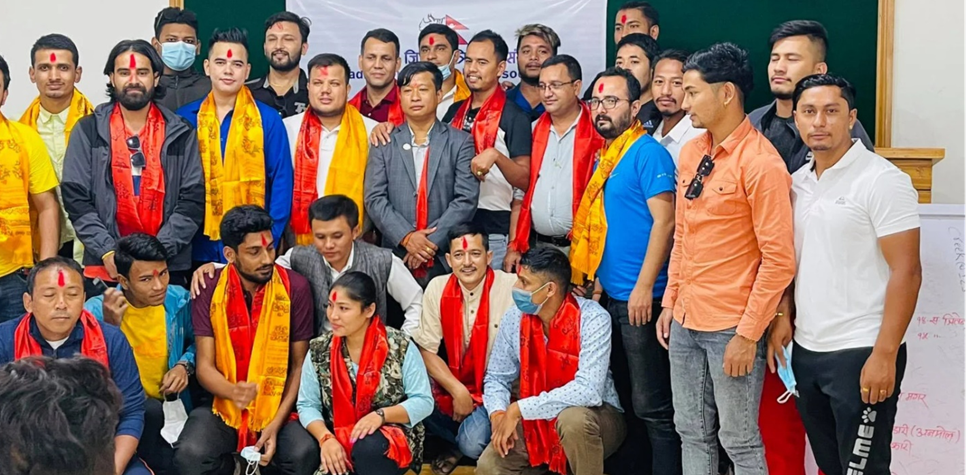
A new chapter in Dhading’s cricket history began on 6 Bhadra 2078 B.S. (August 2021) with the formation of the Dhading District Cricket Association, led by President Dipesh Kadel. The establishment of the association provided the district with an official organizational structure for cricket.
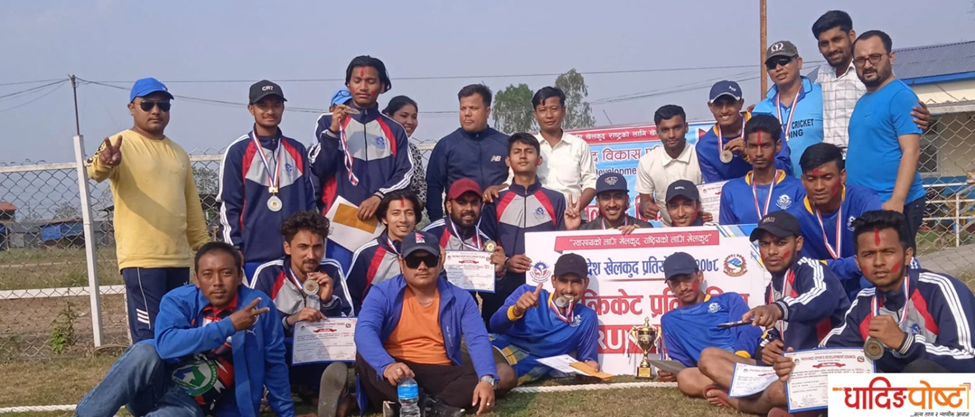
Soon after its formation, the association organized a District-Level T-20 Cricket Tournament, featuring the participation of 14 teams.
Dhading’s cricket soon began making its mark at the provincial level. In Chaitra 2078 B.S. (March/April 2022), the district team finished runner-up in the cricket tournament organized by the Bagmati Provincial Government. This achievement is widely regarded as one of the proudest milestones in the history of cricket in Dhading.
Captained by Amrit Thapa, the Dhading squad included talented players such as Shyam Shrestha, Ujwal Thapa, Swapnil Adhikari, Rupesh Bhujel, and Arambha Timilsina, among others. The team was coached by Senior Coach S.V. Lama, a Dhading native and cricket coach based in Hong Kong, along with Uday Thapa.
Dhading made an impressive start to the tournament by bowling out Rasuwa in just five overs. The team then defeated Kathmandu within 19 overs to secure a place in the semifinals. There, Dhading overcame Kavrepalanchok, whose squad featured former Nepal national player Subash Khakurel and Nepal U-19 international Bibek Ranamagar, earning a well-deserved place in the final.
Although Dhading lost the final to Makwanpur by 37 runs, the team proudly finished as runner-up, marking a historic achievement for the district. In recognition of their outstanding performance, the then Chairperson of Benighat Rorang Rural Municipality, Hari Dallakoti, who attended the final, awarded the team a cash prize of NPR 50,000.
Current Status and Future Prospects
Since then, the Dhading District Cricket Association has continued to organize district leagues, municipal-level tournaments, and Under-18 competitions, ensuring the steady growth of cricket across the district.
Likewise, clubs such as Dhunibesi Cricket Club, Thakre Cricket Club, and Galchhi Cricket Club have remained active by organizing and participating in regular friendly matches, helping to sustain cricket activities throughout the region.
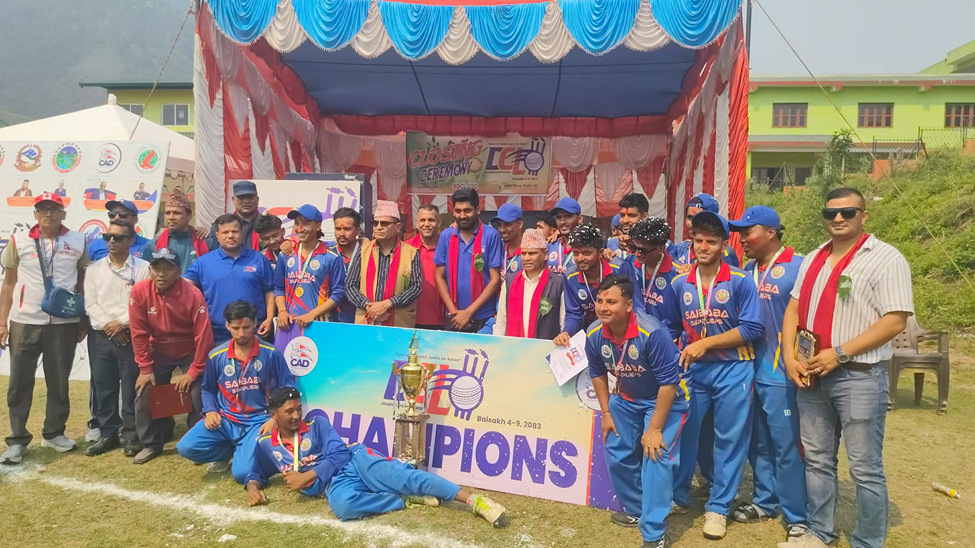
Most recently, the association organized the District Inter-Municipality T-20 Cricket Tournament from 4–9 Chaitra 2082 B.S. (March 2026). Galchhi Rural Municipality emerged as the champion after defeating Dhunibesi Municipality in the final.
The tournament featured more than 120 players representing eight local governments across the district. The closing ceremony was graced by Chatur Bahadur Chand, President of the Cricket Association of Nepal (CAN), as the Chief Guest, highlighting the growing recognition and significance of cricket in Dhading.
The State of Women’s Cricket
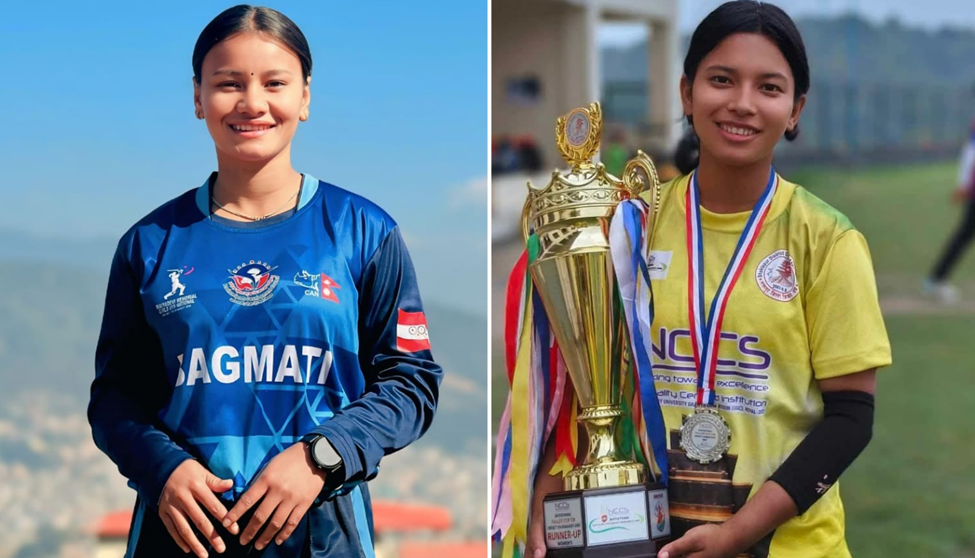
Women’s cricket in Dhading is still in its early stages and has yet to witness significant growth. Nevertheless, there have been encouraging signs of progress. Apsara Magar from Ward No. 8 of Nilkantha Municipality has represented Kathmandu at the provincial level, while Saniya Giri from Ward No. 4 of Siddhalek Rural Municipality has played provincial cricket representing Lalitpur. Both players are currently training at the Great Himalayan Cricket Academy, serving as promising role models for aspiring female cricketers in the district.
Conclusion
The history of cricket in Dhading is more than just the story of a sport-it is a story of perseverance, passion, leadership, and collective dedication. What began as a simple game played on the streets has evolved into a journey that has taken Dhading from local competitions to the provincial stage, with aspirations of reaching the national level.
The dream of a handful of young players who once practiced on roads due to the lack of proper grounds has today grown into an organized cricket movement led by the Dhading District Cricket Association.
From a single leather cricket ball brought to Dhading by Anil KC, cricket has grown into the dream of hundreds of young people. This remarkable journey has been made possible through the dedication and contributions of multiple generations of players, coaches, clubs, social organizations, and passionate cricket enthusiasts.
Looking ahead, the district’s priorities should include the development of proper cricket grounds, regular coaching and training programs, greater investment in women’s cricket, expansion of the game at the school level, and stronger institutional support. With these foundations in place, Dhading has every potential to produce outstanding cricketers capable of representing Nepal at the national level in the years to come.